
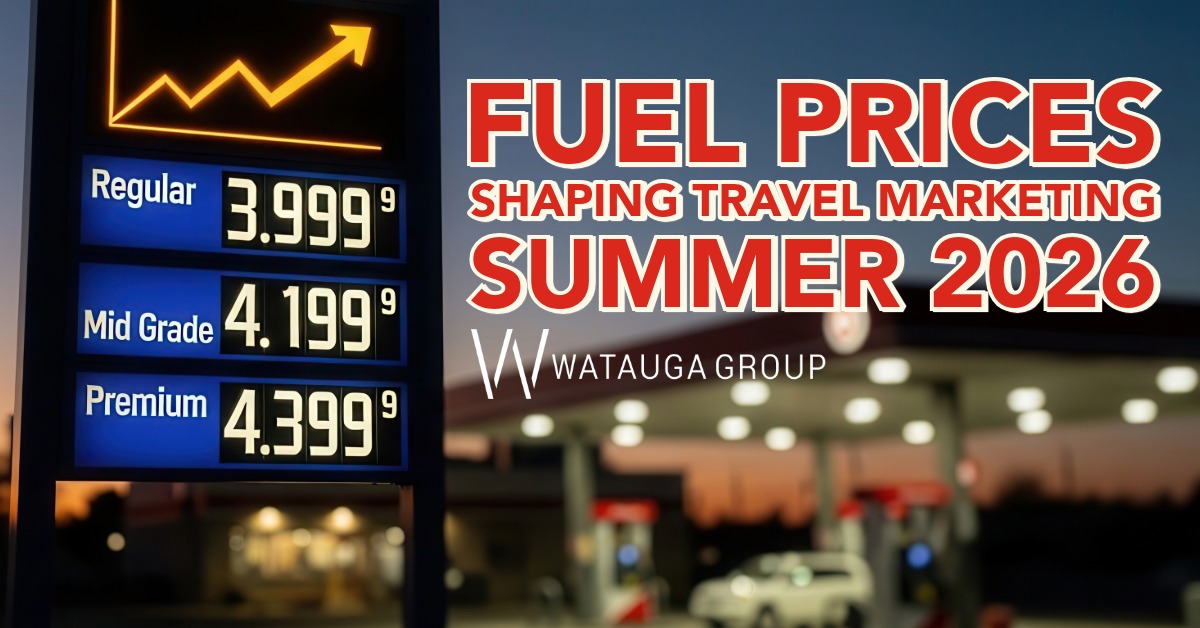
Summer travel decisions are already taking shape—and this year, cost is playing a larger role in how those decisions are made.
Fuel prices have surged due to global oil disruption tied to the Iran conflict, with U.S. gas prices exceeding $4 per gallon and expected to remain elevated. At the same time, rising jet fuel costs are pushing airfares higher and reducing flight availability.
This isn’t just a pricing issue. It’s a behavioral shift happening in real time.
Consumers are reevaluating how far they’re willing to travel, how they’ll get there, and what the trip is ultimately worth. And because these decisions are being made during the spring planning window, destinations have a narrow opportunity to adjust.
Travel demand isn’t disappearing—but it is being reshaped.
Start with Distance: Your Market Radius May Be Too Wide
When travel becomes more expensive, distance becomes a more active part of the decision.
For many destinations, that means the outer edges of their traditional drive markets are no longer as reliable. Trips that once felt reasonable are now being reconsidered when factoring in fuel costs, time, and overall trip expense.
The result isn’t a loss of demand—it’s a shift inward.
This is where many travel marketing strategies fall out of sync. Market prioritization is often based on historical performance, assuming consistency in how far people are willing to travel. But in a higher-cost environment, those assumptions start to break.
Destinations should be reevaluating how their market radius aligns with current behavior—placing greater emphasis on closer, higher-propensity regions while reassessing the efficiency of more distant markets.
The key shift is simple: geographic reach should reflect how consumers are making decisions now, not how they did previously.
Fly vs. Drive Isn’t About Distance—It’s About Who Still Converts
Rising costs don’t just change where people travel. They change who is still willing to make the trip.
That distinction matters.

If You’re a Drive Market
For drive destinations, this shift doesn’t eliminate demand—it reshapes it.
As consumers reassess how they travel, drive markets often become more viable options. But that shift doesn’t simply expand the existing audience. It changes who is considering the destination and how they make decisions.
The audience that emerges tends to be more value-oriented and more responsive to immediate factors like timing, perceived effort, and overall trip efficiency. Rather than following a longer planning cycle, these travelers are more likely to act when the trip feels accessible and worthwhile in the moment.
That shift requires a different approach to capturing demand. Greater emphasis should be placed on high-intent channels that reach consumers already in-market, along with messaging that reinforces value without diminishing the experience.
The opportunity for drive destinations is real—but it will be driven by travelers who decide differently, not just travel shorter distances.

If You’re a Fly Market
For fly destinations, this shift doesn’t eliminate demand—but it raises the threshold for what makes a trip worth taking.
As trips require more time, coordination, and investment, fewer trips make it into consideration. But those that do are chosen more deliberately, with travelers placing greater emphasis on experiences that feel distinct, memorable, and worth the effort to get there.
This creates a different kind of decision process. Rather than reacting to immediate opportunities, these travelers are more planful, weighing whether the destination stands apart enough to justify the additional steps required to reach it. The decision isn’t just about going somewhere; it’s about choosing a destination that feels meaningfully different.
Capturing that demand requires a shift in approach. Audience selection becomes more important than scale, with a focus on travelers more likely to prioritize experience and commit earlier in the planning cycle. At the same time, access still matters, as friction in getting there can quickly narrow consideration.
The opportunity for fly destinations lies in reaching travelers who plan ahead and prioritize experiences that feel worth the effort to get there.
Market Efficiency Is Changing—Adjust in Real Time
As travel behavior shifts, market performance won’t move in unison.
Some markets will hold steady. Others may soften. And in many cases, the changes won’t be dramatic—they’ll show up gradually in conversion rates, engagement, or cost efficiency.
That makes this less about reacting to a single signal and more about staying closely attuned to how performance evolves.
For destinations, that means looking beyond where demand is coming from and paying attention to how it’s showing up. Audience behavior, timing, and response to messaging may shift alongside market performance, requiring small but meaningful adjustments rather than wholesale changes.
The most effective approach is to stay flexible—continuously evaluating which markets are delivering, which audiences are responding, and how messaging is resonating.
Because in a dynamic environment like this, advantage doesn’t come from having the perfect plan upfront. It comes from being willing to adjust as the signals become clearer.